About the museum
About & Credits
How we source and present each exhibit, who made the images, and how the museum is built to be accessible. The full bibliography, organised by exhibit, is on the References page.
Editorial standards
- Every factual statement carries a gold citation marker that opens its source. All sources are listed by exhibit on the References page, and each was checked against its publisher or DOI record.
- We cite peer-reviewed primary research wherever possible, and reputable museums and research institutions for summaries.
- Dates are given as the cited studies report them, including their ranges. Where studies disagree, we show the range of estimates rather than choosing one.
- Claims that are contested are marked Debated, Hypothesis or Active research, and both sides are cited.
- We do not show photographs of Ancestral Remains that have been returned to their communities, such as Mungo Lady. We show the landscape instead.
- All content is provisional and under scientific review.
Image credits
Photographs are openly licensed images from Wikimedia Commons, used under the licences listed. They have been resized but not otherwise altered. All ornaments, diagrams and the lineage tree are original SVG artwork made for this museum. The lineage tree is an illustrative model, not real data.
| Image | Author | Licence | Source |
|---|---|---|---|
| Cast of the Lucy skeleton (AL 288-1), Muséum national d’Histoire naturelle, Paris | “120” | CC BY 2.5 | Wikimedia Commons |
| Mrs Ples (Sts 5), original cranium | José Braga; Didier Descouens | CC BY-SA 4.0 | Wikimedia Commons |
| Lake Mungo lunette | Rueparadis | CC BY-SA 4.0 | Wikimedia Commons |
| Shanidar Cave, Iraqi Kurdistan | Khoshhat | CC BY-SA 4.0 | Wikimedia Commons |
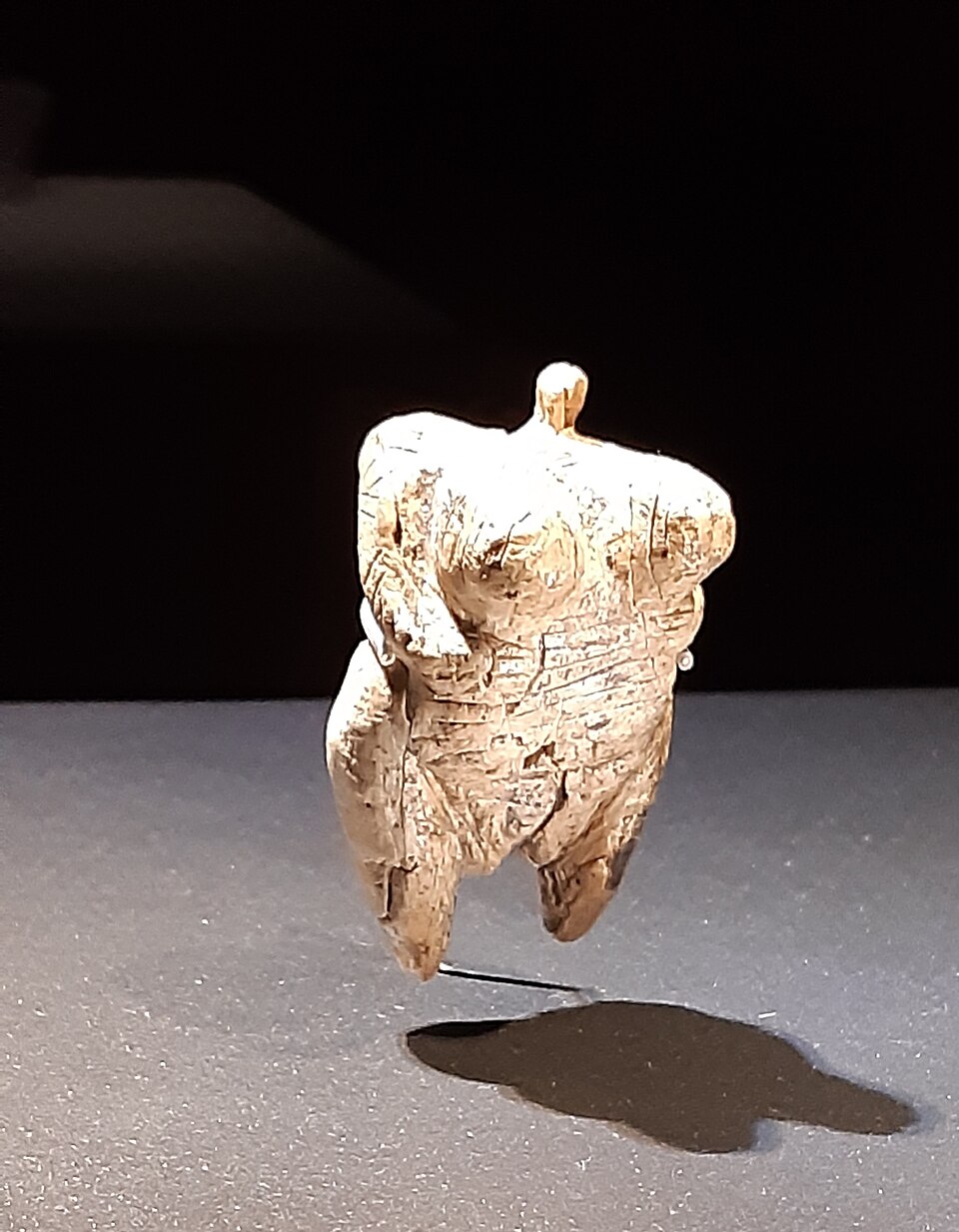
| Venus of Hohle Fels, Urgeschichtliches Museum Blaubeuren | Catatine | CC BY-SA 4.0 | Wikimedia Commons |


Map tiles © OpenStreetMap contributors, used under the Open Database License. Map library: Leaflet (BSD-2-Clause). Fonts: Cinzel and EB Garamond (SIL Open Font License) via Google Fonts.
Accessibility
- Pages use semantic HTML landmarks, a skip link and a logical heading order.
- Text and interface colours are chosen for high contrast against the dark background. Gold and lavender are never the only way meaning is conveyed: labels and patterns also distinguish them.
- Every image has descriptive alternative text, and diagrams have text descriptions.
- Citation markers are buttons. The source panel can be opened with Enter or Space, keeps keyboard focus inside while open, closes with Escape, and returns focus to where you were.
- Animations are disabled when your device requests reduced motion.
- The map has a full text list of every site, so no information depends on the map alone.
If anything is hard to use, please tell us so we can fix it.